The Steps of the Sale: A Complete Walk-Through of the Car Sales Process, From Greeting to Delivery
The Process Didn’t Die — The Buyer Just Enters It Later
For years, resources about the car sales process have taught the same school of thought: there is a “road to the sale,” a defined sequence of steps that takes a customer from introduction to delivery. The framework is still encouraged because it works. What has changed is not the process itself, but where buyers enter it.
In 2026, customers rarely walk into a dealership as blank slates. Most arrive after spending time online comparing trims, reading reviews, checking payments, browsing inventory, watching video walkarounds, and sometimes submitting a lead or starting the deal digitally. Many already know the exact vehicle they are interested in on the lot before ever meeting a salesperson.
The steps haven’t changed; where the buyer enters them has. Most customers now arrive informed (Cox Automotive 2025 Car Buyer Journey Study).
That means today’s customer often enters the sales path around steps three, four, or five, bypassing the first couple of traditional steps. But many dealerships still restart the entire journey from square one, turning the customer off from the get-go.
When a customer clearly states which vehicle they are interested in and, in return, is hit with a 20-question interview, the experience feels repetitive rather than helpful—and buyers notice that friction.
1 in 4 buyers who started online had to start over in-store, and 41% called doing the same thing twice frustrating (CDK Friction Point Study)
The modern salesperson’s role is different from what it was a decade ago. Instead of creating demand from scratch, their job is now to confirm the customer’s decisions, remove uncertainty, and move the customer forward.
This guide walks through the complete car sales process in order—from greeting to delivery and follow-up—and explains what each step looks like when done right in 2026.
The Steps at a Glance:
Step 1 — Meet & Greet
Objective: Set a low-pressure tone and earn the right to ask questions.

The meet-and-greet sounds simple, but it shapes everything that follows. Buyers make fast judgments about whether they feel guided or sold. It’s important what to say and what not to say in the first 10 minutes with a car buyer.
In the past, this step often began with broad questions:
“Just looking today?”
“What brings you in?”
“What kind of vehicle are you interested in?”
In 2026, many customers have already answered those questions online.
The better approach acknowledges their effort before adding anything new.
Instead of:
“So, what are we looking for today?”
Try:
“I saw you were looking at the blue Explorer XLT online. Glad you made it in—let’s take a look and make sure it’s the right fit.”
That’s a subtle difference, but it changes the dynamic immediately. You’re not restarting the conversation. You’re continuing it.
Step 2 — Qualify / Needs Analysis
Objective: Understand needs, budget, timeline, and who is involved in the decision.

This is one of the most important (and most frequently rushed) steps in the entire process.
Salespeople sometimes skip discovery because they assume they already know what the customer wants. But wanting a vehicle and understanding the reason behind it are two different things.
Good qualifications include things like:
- Daily driving habits
- Passenger needs
- Budget considerations
- Purchase timeline
- Trade situation
- Decision-makers
- Must-have features
The key is asking useful questions rather than checklist questions.
Instead of:
“Do you want leather?”
Try:
“What matters most for your next vehicle?”
That answer may reveal something bigger, like:
“We just had our second child.”
“I drive 90 miles a day.”
“My lease ends next month.”
“I tow a boat every weekend.”
Those details shape everything afterward.
Weak discovery creates weak closes because objections later often reveal questions that should have been asked earlier. Adopting these car salesman skills will eliminate the struggle at this step and at the close.
Step 3 — Vehicle Selection
Objective: Match inventory to needs and confirm what they came in for.
Vehicle selection used to involve helping customers narrow dozens of possibilities. Now, many customers arrive with a VIN.
Often, the temptation is to redirect immediately:
“I know you came for that one, but let me show you something else.”
Sometimes another option genuinely fits better, but confirmation should come before redirection.
Start with what brought them in:
“You came to see this one for a reason—let’s make sure it checks the boxes.”
Then determine whether alternatives add value. When done correctly, additional choices feel helpful. But if done poorly, they feel like steering.
Customers increasingly want validation of their research rather than replacement.
Step 4 — Presentation / Walkaround
Objective: Present the vehicle around their priorities—not around a generic feature list.
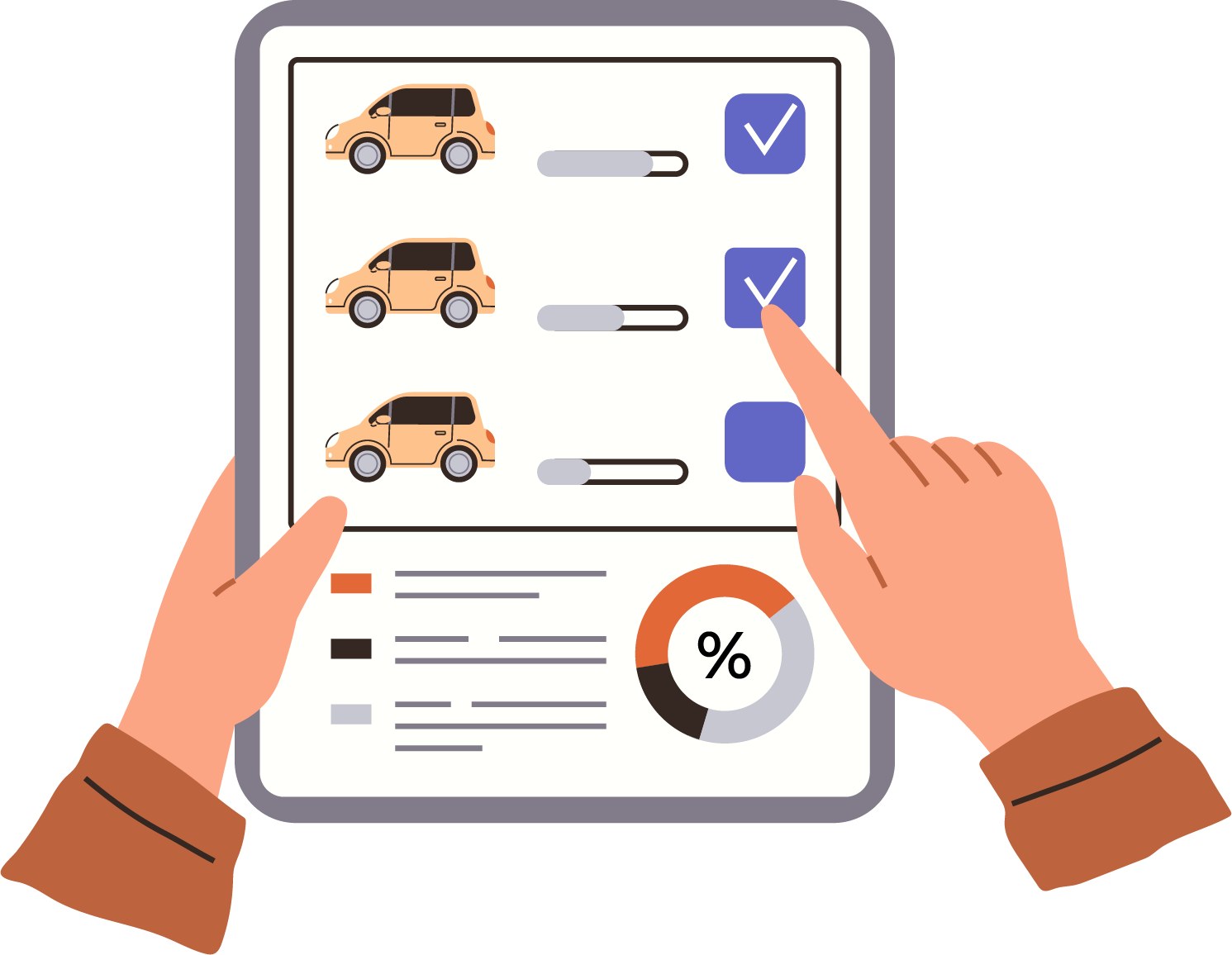
This is where many presentations fall apart, and it is a good place to upgrade your sales process.
Some salespeople give the same walkaround to every buyer:
“Here’s the grille. Here are the wheels. Here’s the infotainment system.”
The problem is that customers care about different things.
- The commuter cares about fuel economy.
- The parent cares about rear-seat access.
- The truck buyer cares about towing.
- The technology buyer wants connectivity.
A good walkaround uses information gathered earlier.
If someone mentioned long highway drives, you might include:
“One thing you’ll appreciate is the adaptive cruise system during those long commutes.”
If they mentioned kids:
“Notice how easy these rear seats are to access.”
A feature dump overwhelms customers. Features matter only when attached to a benefit the customer values, and a personalized presentation makes them feel relevant.
Step 5 — Test Drive (Demonstration)
Objective: Let the vehicle sell itself—confirmation, not persuasion.
The test drive is often where emotional ownership begins. But the purpose isn’t to create pressure—it’s to create confidence.
A strong test drive follows a route that highlights what matters to the customer:
- Highway driving
- City streets
- Parking situations
- Ride quality
- Visibility
- Technology interaction
The salesperson should try to guide without dominating. Nonstop selling isn’t the best approach. Be okay with silence to allow the customer to connect with the vehicle, then point out:
“Notice how quiet the cabin feels on the highway.”
Then pause and let the customer experience it.
Modern buyers frequently arrive seeking validation that reality matches their expectations. The test drive confirms whether the vehicle they researched online actually feels right in person. Luckily, the car often sells itself.
Step 6 — Trade Appraisal
Objective: Evaluate the trade candidly, which can occur while the customer drives.
Trade discussions can create anxiety because customers often fear hidden calculations. This is a critical step where transparency matters.
Customers want to understand:
- Condition impact
- Mileage impact
- Market demand
- Reconditioning considerations
- Value sources
Operationally, this process can run simultaneously with the test drive to save time, which helps speed things along and shows the customer that their time is respected.
Make sure to be mindful that during the trade appraisal, the goal isn’t simply to reach a number; it’s to show how that number was reached.
Step 7 — Write-Up / Present the Numbers (The Desk)
Objective: Present a clear, structured proposal to the customer.

Now the conversation becomes concrete as details are laid out. The biggest mistake is making the numbers feel mysterious. Customers don’t expect to be happy about every cost, but they do expect to understand what each one means. Confusion creates resistance while clarity creates momentum.
A clean proposal includes:
- Vehicle price
- Taxes
- Fees
- Trade value
- Down payment
- Payment options
Presentation matters too. Don’t throw papers across the desk and say:
“So, what do you think?”
Walk them through it.
“This is your vehicle price. Here’s your trade value. Here’s the difference. These are your payment options.”
Confidence and simplicity reduce friction.
Step 8 — Close
Objective: Ask for the business and resolve objections.

Many newer salespeople avoid closing because they fear sounding pushy. Others tend to overcomplicate it. An easy way to think of it is that closing shouldn’t feel like pressure, but direction.
If the customer has selected the vehicle, driven it, discussed the trade-in value, and reviewed the numbers, then asking for the sale should feel natural.
Examples include:
“Does this look like the vehicle you’d like to take home?”
“Are we ready to move forward?”
Common objections often involve:
- Payment concerns
- Trade concerns
- Timing concerns
- Missing information
If a customer has an objection, don’t panic and immediately give away profit. Instead, first work to understand the objection, then clarify and/or offer services if any are available to rectify the concern.
A rule of thumb to know if you are on the right track is that strong closes feel calm and clean, while weak closes feel defensive.
Step 9 — F&I (Finance & Insurance)
Objective: Hand off financing and protection discussions while staying engaged.
Customers see the sales experience as a single continuous process; however, many salespeople mentally disappear once the deal reaches F&I… and that’s a mistake.
F&I typically covers:
- Financing terms
- Protection products
- Service contracts
- GAP protection
- Maintenance options
- Required paperwork
And all of that takes time. One of the major dealership friction points is waiting. Customers often feel a loss of momentum after believing they have already bought the vehicle, and that is not a good feeling.
Set expectations early:
“Once we finish here, we’ll move into financing and paperwork. That usually takes about X minutes.”
Small efforts of expectation management can greatly reduce potential frustration.
Step 10 — Delivery (and Follow-Up)
Objective: Create a clean, celebratory handoff—and begin retention.

Delivery is not paperwork with keys; it’s the beginning of ownership.
Great deliveries include:
- Feature setup
- Phone pairing
- Technology explanation
- Questions and answers
- Documentation review
- Next steps
Too many dealerships celebrate the sale and ignore the relationship. The best stores understand that future revenue often comes from:
- Service visits
- Repeat purchases
- Referrals
Retention starts at delivery, and follow-up closes the loop. A simple call or message after delivery can uncover questions, reinforce confidence, and strengthen trust. And always make sure to schedule the first service appointment before the sale concludes.
Where the Buyer Actually Enters in 2026
The reality is that many buyers no longer begin at step one. They arrive having completed much of the journey digitally.
They often already know:
- The model
- The trim
- The payment range
- Their trade estimate
- Available inventory
Even though the customer frequently enters the sales path around steps three through five, the process and the order still matter. The role of the salesperson needs to be adjusted slightly to accommodate the knowledge the customer brings.
The car sales process doesn’t have to start from the very beginning to keep the customer moving along the path. The dealerships that understand this eliminate unnecessary friction, create smoother experiences, and complete the sale seamlessly.
If you want to give your customers the smoothest path to the sale, follow these steps and invest in a CRM that automates a seamless customer experience from first engagement to post-sale follow-up.
AutoAlert CXM delivers before, during, and after the sale.
Frequently Asked Questions:
What are the steps of the sale in car sales?
The standard car sales process includes Meet & Greet, Needs Analysis, Vehicle Selection, Presentation, Test Drive, Trade Appraisal, Numbers Presentation, Close, F&I, and Delivery with Follow-Up.
What is the "road to the sale"?
The road to the sale is a structured framework salespeople use to move a customer from initial contact through purchase and delivery.
Does the close come before or after F&I?
The close comes before F&I. The customer agrees to move forward before financing and protection discussions begin.
How long does the car sales process take?
Time varies based on financing, trade evaluation, paperwork, and digital preparation. Buyers who complete steps online beforehand generally spend less time at the dealership.
How has the car sales process changed in 2026?
The steps themselves have not changed. What changed is where customers enter the process. Today's buyers often arrive informed and partially through the journey already, making the salesperson's role more about confirmation and guidance than starting from scratch.